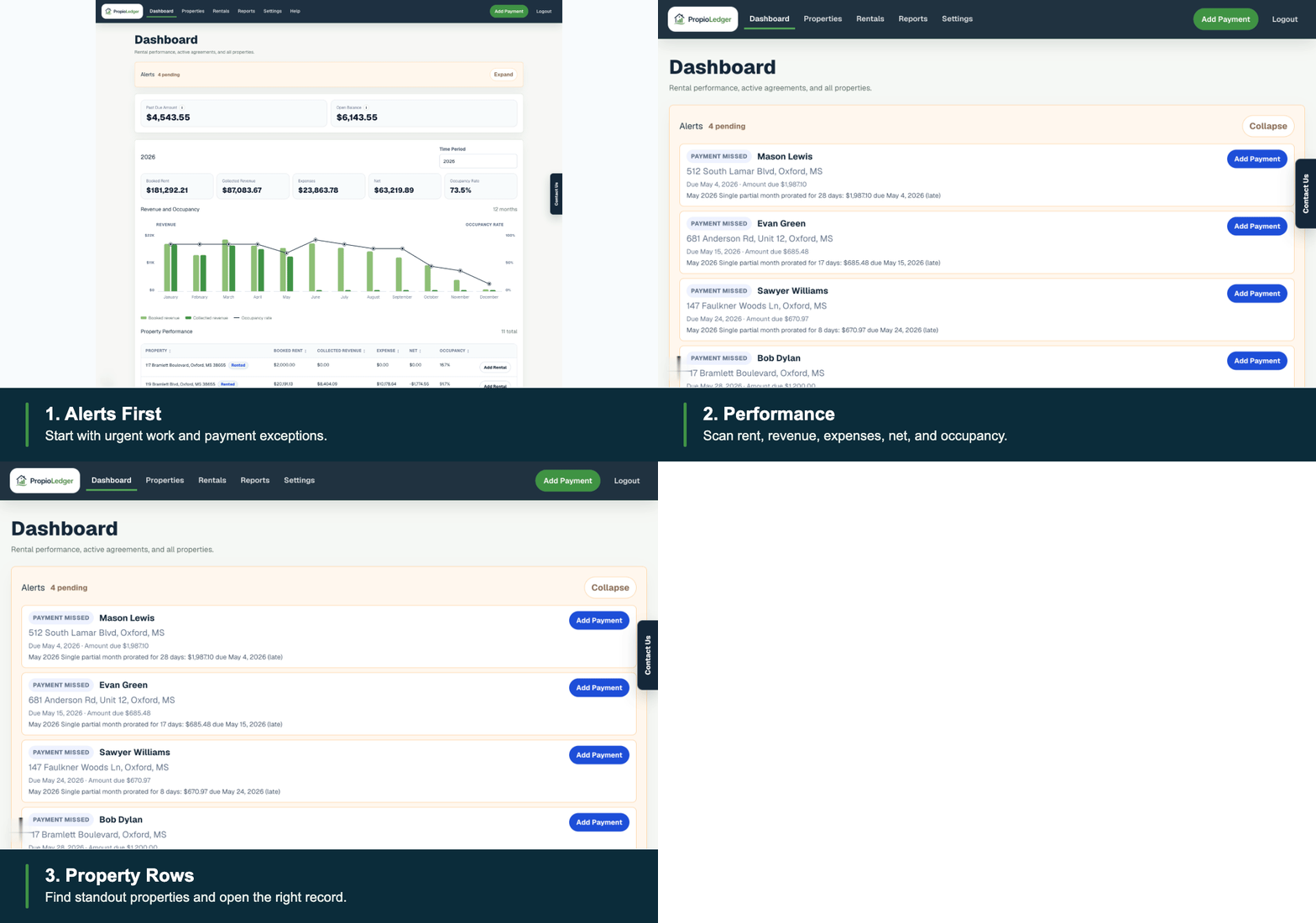
Login

PropioLedger Feature

Track Rent Charges, Payments & Open Balances

PropioLedger uses a rental ledger to calculate balances from charges, due dates, rental payments, refunds, and adjustments instead of relying on manually typed balance summaries.

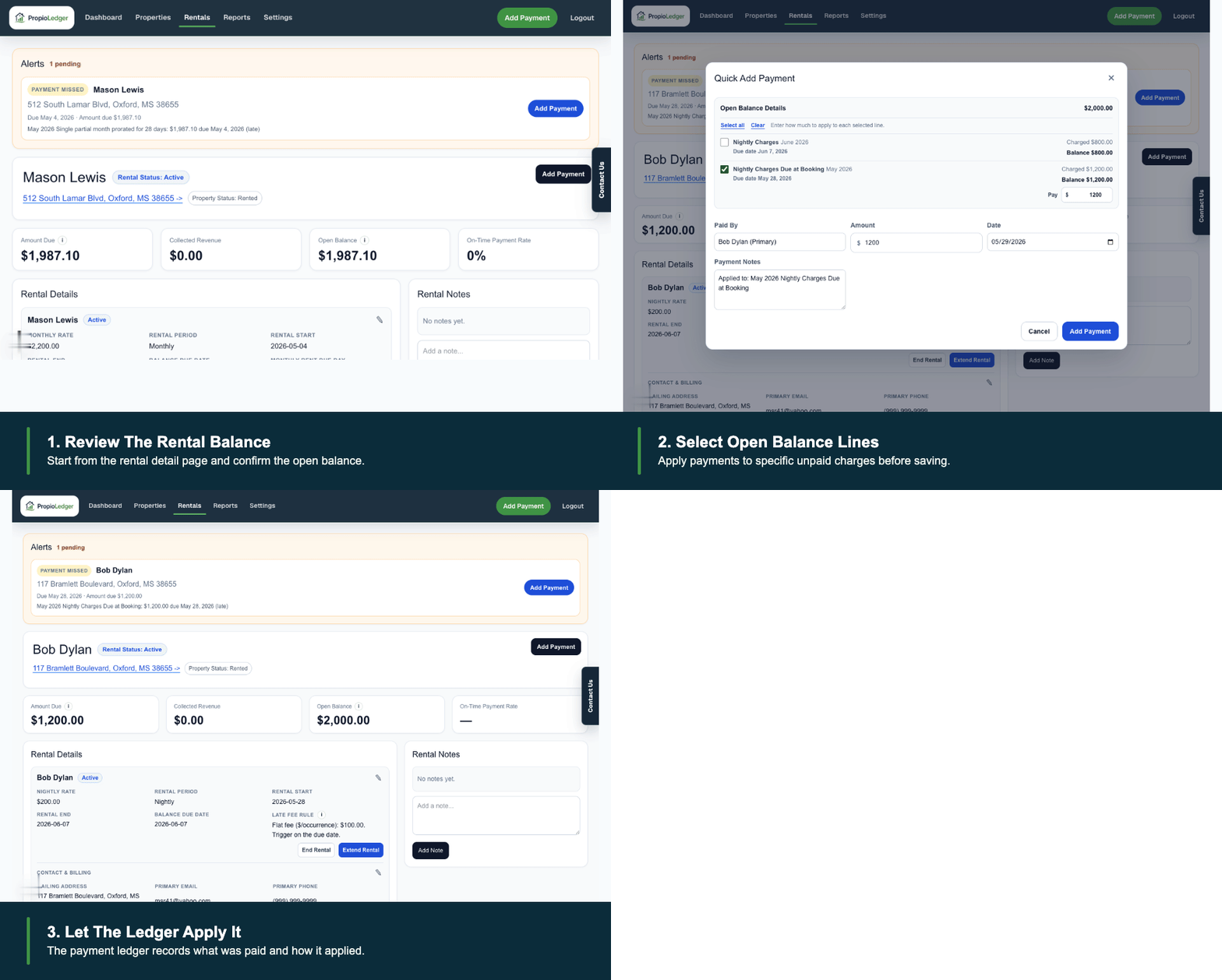
Animated walkthrough of rental balances, the Add Payment helper, and the Rental Ledger.
Payment helpers and ledger detail stay tied to the same balance calculation.
Proof pointOpen Balance and Past Due Amount answer different operational questions.
Proof pointPayments, refunds, and waivers remain auditable.
Proof pointDue dates drive collection follow-up instead of broad balance guesses.

What is a Rental Ledger?

A rental ledger tracks rent charges, payments, credits, refunds, and open balances for rental properties.

What It Includes

  • Open Balance for all visible unpaid committed charges
  • Past Due Amount for unpaid charges due today or earlier
  • Rental payment tracking across rent, deposits, late fees, and move-in charges
  • Rent collection tracking for paid, unpaid, waived, and refunded amounts
  • Refund and waiver handling that keeps audit history intact

Why It Matters

  • Answer what is owed and why from the same ledger detail.
  • Separate not-yet-due balances from true collection follow-up.
  • Keep payment records auditable even after refunds.
Feature FAQ

Common questions

How does a rental ledger work?

A rental ledger starts with charges and due dates, applies payments, refunds, and waivers, then calculates the remaining open balance and past due amount.

How do landlords track rent payments?

Landlords can track rent payments by recording each payment against the rental record, then reviewing ledger allocation, collected revenue, open balance, and past due amount.

What is the difference between open balance and past due amount?

Open balance includes unpaid visible ledger charges, including charges that may not be due yet. Past due amount only includes unpaid charges due today or earlier.

What is an open balance?

An open balance is the unpaid amount still owed on visible rental ledger charges, including unpaid charges that may not be due yet.

Why is a rental ledger important?

A rental ledger is important because it explains what was charged, what was paid, what was adjusted, and what remains open for each rental.

Product Context

Explore related capabilities

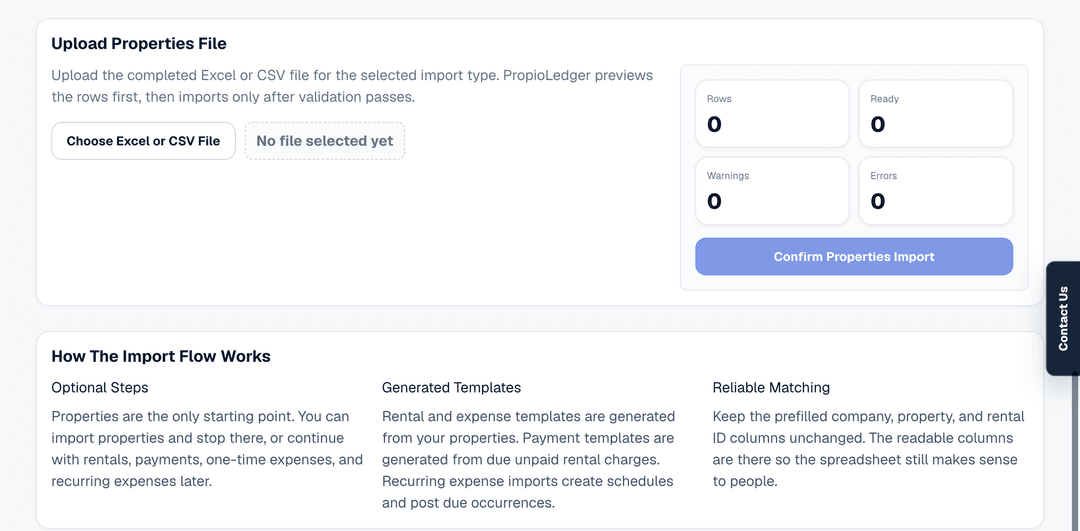
Import Center page showing staged import options for properties, rentals, payments, expenses, and recurring expenses.

Import Center

Use Excel and CSV templates to import properties, rentals, payments, expenses, and recurring expenses during onboarding.