
Properties
Property Financials
Property cashflow, rental history, expense summary, expense ledger, recurring expenses, booked rent, and occupancy in one guide.
What Property Financials Show
Use the property detail page to review the property record, listing profile, expenses, financial overview, cashflow, rental history, and map in one place.
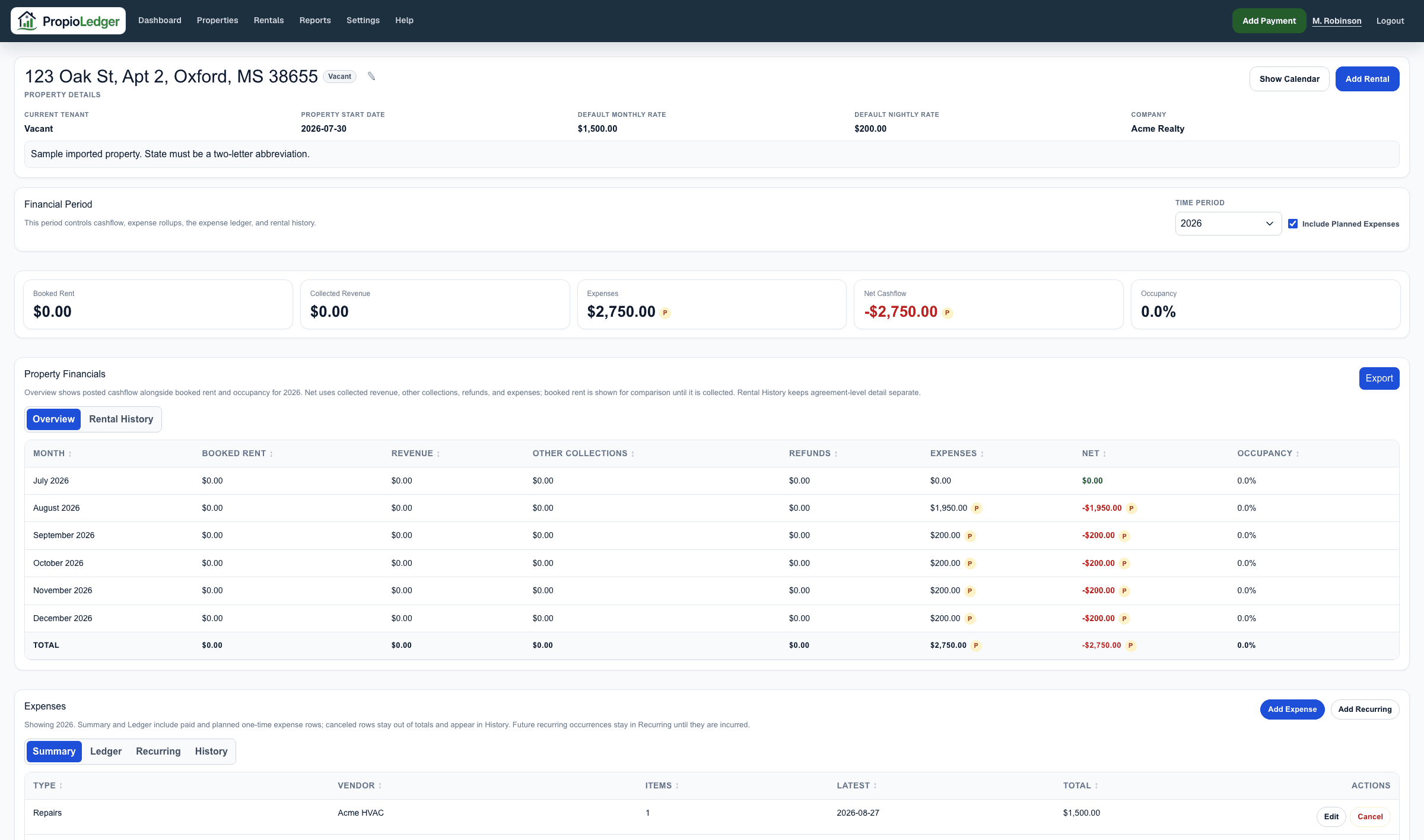
The Property Financials section is the main property-level read because it combines booked rent and occupancy context with posted cash movement.
Cashflow
Property cashflow is property-level. Revenue includes gross revenue payments for the property, Other Collections includes non-revenue collections, Refunds show returned payment amounts, Expenses show paid and included planned property expenses, and Net combines those values for the selected period.
Net is cash-based. Booked rent is shown for comparison and occupancy context, but it is not included in Net until it is collected as revenue.
Rental History
Rental History shows agreement-level rows for rentals that overlap the selected property financial period. It includes tenant, display status, start and end date, booked rent, collected revenue, and open balance.
Expenses And Recurring Expenses
The Expenses area supports a Summary tab for category and vendor rollups, a Ledger tab for paid and planned line items, a Recurring tab for recurring expense schedules, and a History tab for canceled expense rows.
Paid expenses are actual incurred costs. Planned expenses are expected future costs and are marked with a small P indicator in property and report views. Canceled expenses stay available in History but are removed from totals.
Recurring expense schedules materialize due occurrences into property expenses. Future scheduled occurrences stay scheduled until they become due, while forecast-style views can call attention to them as planned cost context.
Last Updated
August 2026