
Introduction
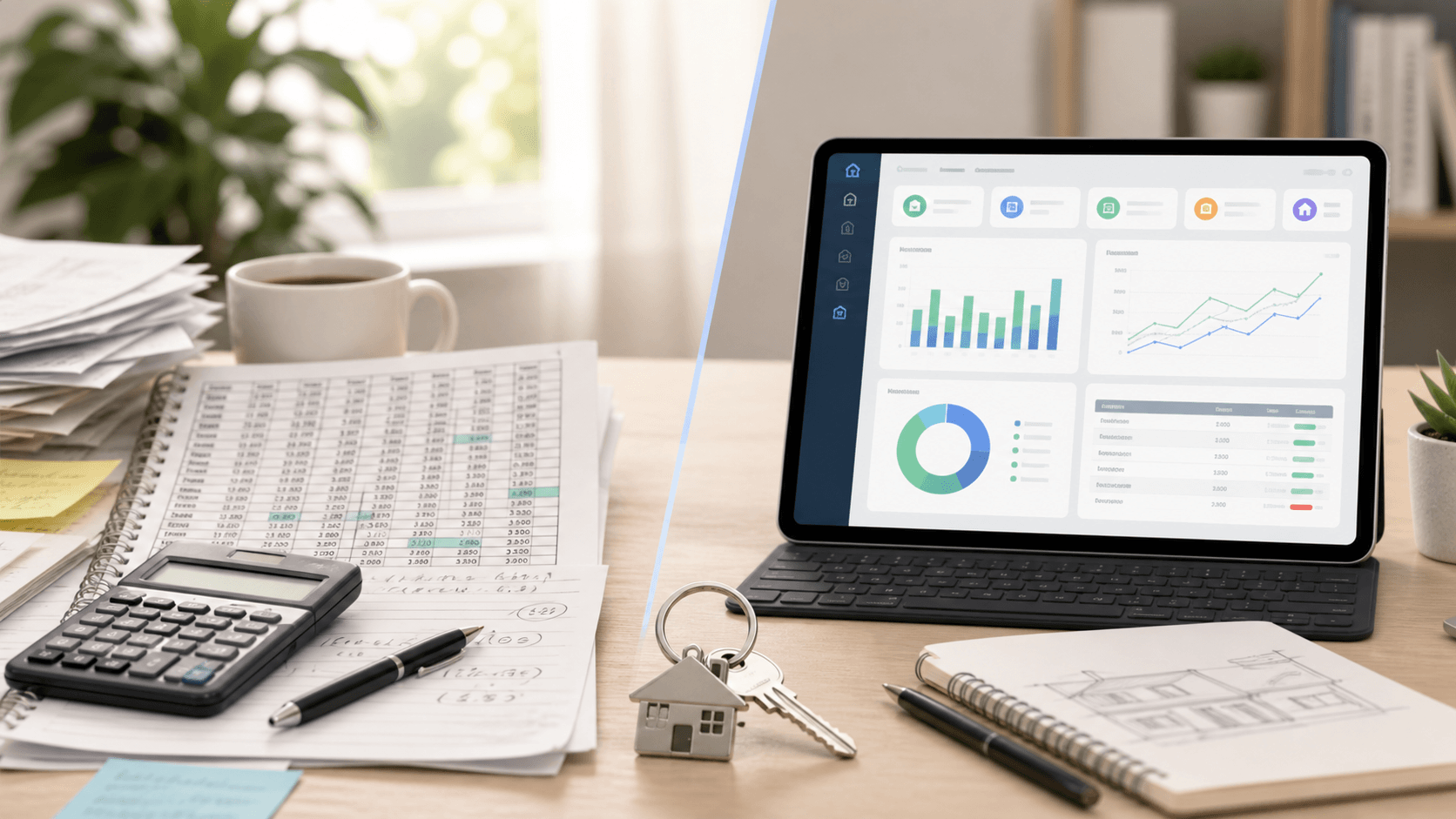
Many landlords begin managing rental property finances with spreadsheets. Spreadsheets are flexible, familiar, and inexpensive. For landlords managing a small number of properties, they often provide enough functionality to track basic income and expenses.
As rental portfolios grow, however, spreadsheets can become increasingly difficult to maintain. Financial data becomes spread across multiple files, formulas become harder to manage, and reporting often requires significant manual effort.
Rental property accounting software provides a more structured approach by organizing financial information, tracking balances, generating reports, and helping landlords monitor property performance.
What Is Rental Property Accounting Software?
Rental property accounting software is software designed to help landlords track rental income, property expenses, rental ledgers, balances, cash flow, occupancy, profitability, and portfolio-level reporting in one organized system.
Why Most Landlords Start With Spreadsheets
Spreadsheets are often the first financial tracking tool used by landlords. Popular options include Microsoft Excel, Google Sheets, and Apple Numbers.
Many landlords appreciate spreadsheets because they are familiar, require little setup, have low upfront cost, and allow complete customization. For a landlord with one or two rental properties, spreadsheets may provide everything needed.
What Landlords Commonly Track In Spreadsheets
Many landlords use spreadsheets to track core financial and operational information. Some also build custom formulas and dashboards to monitor performance.
- Rental income
- Property expenses
- Mortgage payments
- Property taxes
- Insurance
- Maintenance costs
- Occupancy
- Basic cash flow
Advantages Of Spreadsheets
Spreadsheets are low cost, flexible, familiar, and easy to customize. Most landlords already have access to spreadsheet software, which makes spreadsheets one of the least expensive ways to begin tracking rental property finances.
Spreadsheets also give landlords full control over categories, reports, calculations, and layouts. That control can be useful for specialized analysis or one-off planning.
Limitations Of Spreadsheets
While spreadsheets are useful, they also introduce challenges as rental portfolios grow. Most spreadsheet systems require manual updates, and every payment, expense, balance adjustment, and calculation must be maintained manually.
Formula errors can create inaccurate reports. Multiple files, multiple tabs, and multiple versions can create confusion and reporting inconsistencies. Reporting often requires additional spreadsheet work, especially for cash flow reports, profitability reports, occupancy reports, and property comparisons.
Tracking charges, payments, open balances, and past-due amounts can also become difficult in spreadsheets because accurate balances depend on timing, payment allocation, credits, refunds, and unpaid charges.
Advantages Of Rental Property Accounting Software
Rental property accounting software centralizes financial records in one place. Instead of maintaining multiple spreadsheets and files, landlords can organize income, expenses, ledgers, balances, and reports around properties and rentals.
Software can also provide property-level visibility, built-in reporting, rental ledger management, and portfolio insights. This makes it easier to compare income, expenses, cash flow, profitability, unpaid balances, and expense trends across a rental portfolio.
Spreadsheet vs Rental Property Accounting Software
Neither approach is inherently right or wrong. The best choice depends on portfolio size, complexity, reporting needs, and how much manual spreadsheet maintenance the landlord wants to manage.
Spreadsheets are often stronger for low cost, flexibility, custom calculations, and very small portfolios. Rental property accounting software is often stronger for reporting, organization, rental ledgers, open balance tracking, property comparisons, portfolio visibility, and long-term scalability.
Signs You Have Outgrown Spreadsheets
Many landlords continue using spreadsheets longer than they should. A more structured system may be useful when manual maintenance starts getting in the way of clear financial visibility.
- You maintain multiple spreadsheet files
- You spend significant time updating reports
- You have difficulty tracking unpaid balances
- Formula errors appear regularly
- You are uncertain about property performance
- Comparing properties has become difficult
When Spreadsheets Still Make Sense
Spreadsheets may remain a good solution when you own only one or two rental properties, reporting needs are simple, financial activity is limited, and you enjoy managing spreadsheets.
Many successful landlords continue using spreadsheets for years. The key is whether the system still gives you accurate records and useful visibility without consuming too much time.
When Software Becomes More Valuable
Rental property accounting software often becomes more valuable when you manage multiple properties, reporting becomes important, balances need monitoring, occupancy tracking matters, portfolio comparisons become difficult, or spreadsheet maintenance consumes too much time.
The larger and more complex the portfolio becomes, the greater the benefit software typically provides.
Final Thoughts
Spreadsheets and rental property accounting software both serve valuable roles in rental property management. Spreadsheets provide flexibility and simplicity, while rental property accounting software provides structure, reporting, and visibility.
As rental portfolios grow, many landlords find that software helps reduce manual work and provides a clearer understanding of property performance. The best solution is the one that helps you maintain accurate records, understand financial performance, and make informed decisions about your rental properties.
Ready to Organize Your Rental Property Finances?
PropioLedger helps landlords track income, expenses, payments, balances, reports, and property performance without rebuilding records from disconnected spreadsheets.
Educational Disclaimer
This guide is for general educational purposes and is not tax, accounting, legal, or financial advice. Landlords should consult a qualified professional for guidance specific to their situation.