
Reports
Past Due Report
Use the collections-focused report for unpaid rental ledger charges due today or earlier.
Overview
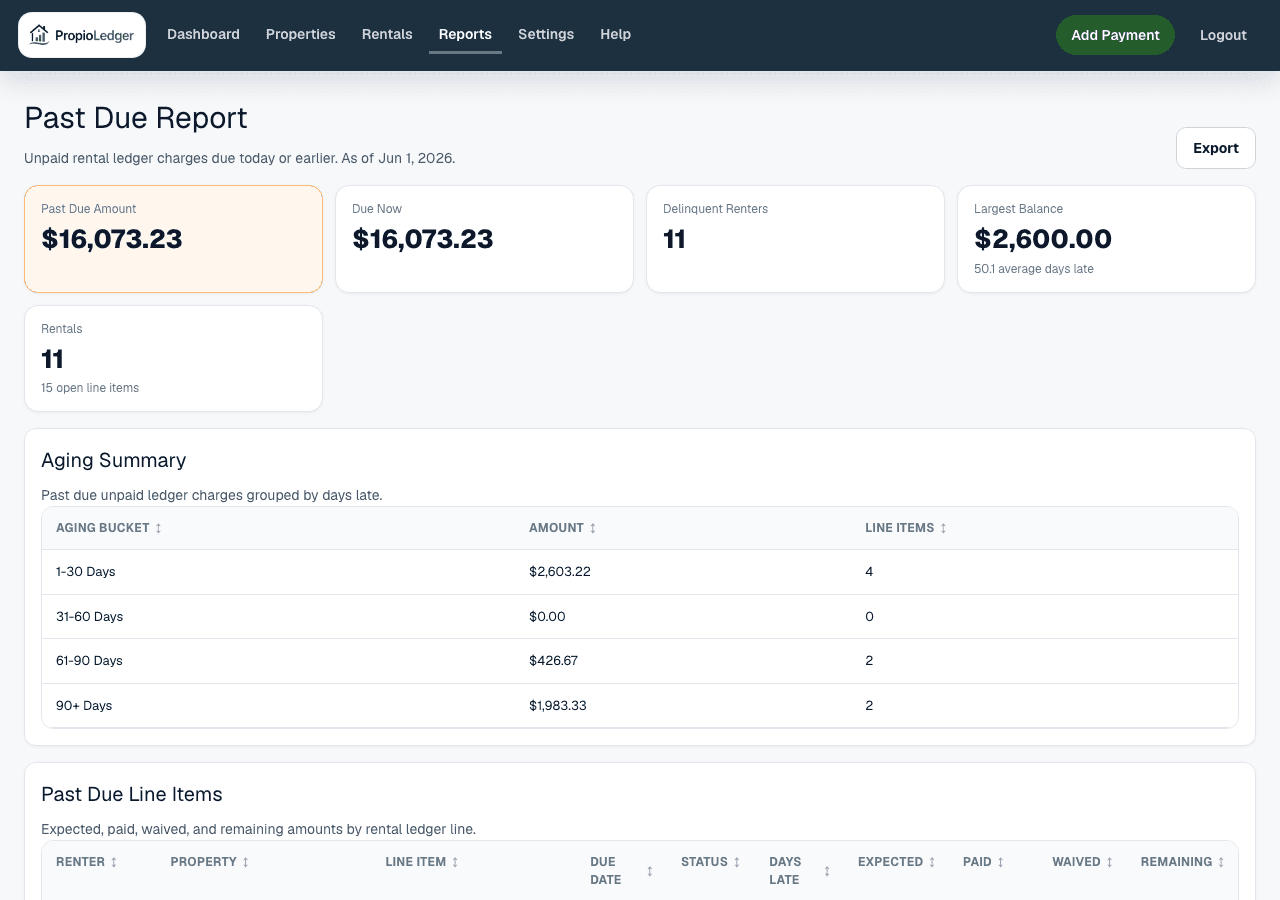
The Past Due Report helps landlords identify unpaid rental ledger charges that are due today or earlier. It is the primary collection and follow-up report in PropioLedger.
Use this report when you need to know who owes money right now, how much is due, how late balances are, and which rentals should be prioritized for follow-up.
When To Use It
Not every unpaid charge requires collection action. Future rent and upcoming charges may be unpaid without being late.
The Past Due Report filters the balance view down to charges that should already have been paid, helping you prioritize collection efforts, monitor delinquency, and reduce missed rent.
What Counts As Past Due
A past due balance is an unpaid rental ledger charge whose due date is today or earlier. Due Today is included in Past Due totals and collection follow-up counts.
Examples include unpaid rent, partially paid rent, outstanding fees, move-in charges, deposits, or other rental charges that remain unpaid when their due date arrives.
Summary Metrics
Past Due Amount is the sum of Remaining Amount for visible unpaid charges due today or earlier.
Due Now mirrors the due-date-aware amount included for immediate follow-up.
Delinquent Renters is the number of rentals with at least one charge due today or earlier.
Largest Balance is the largest remaining amount on a visible past-due line item.
Average Days Late is calculated across rows that are actually past due. Due Today rows are included in collection totals, but they are not late by one or more days.
Rentals is the number of rentals represented by the past-due line items.
Aging Summary
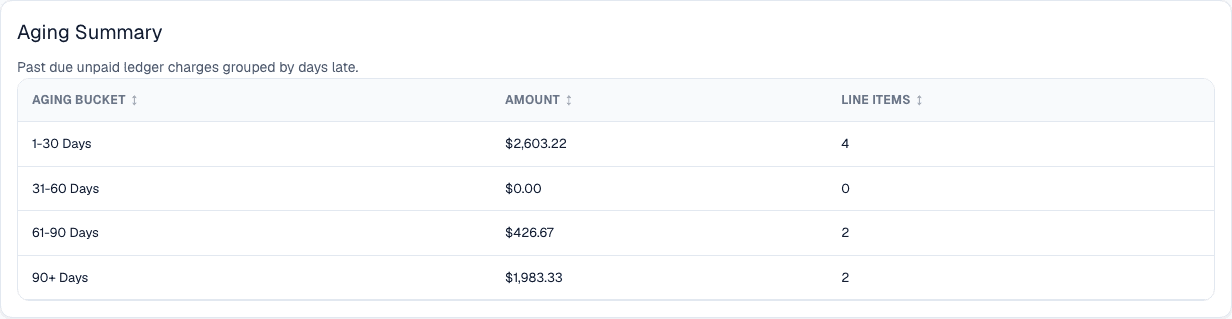
The Aging Summary groups unpaid past-due ledger charges by how long they have been late. Buckets include 1-30 Days, 31-60 Days, 61-90 Days, and 90+ Days.
Use the aging summary to prioritize older balances, understand collection risk, and monitor whether delinquent balances are getting worse over time.
Past Due Line Items
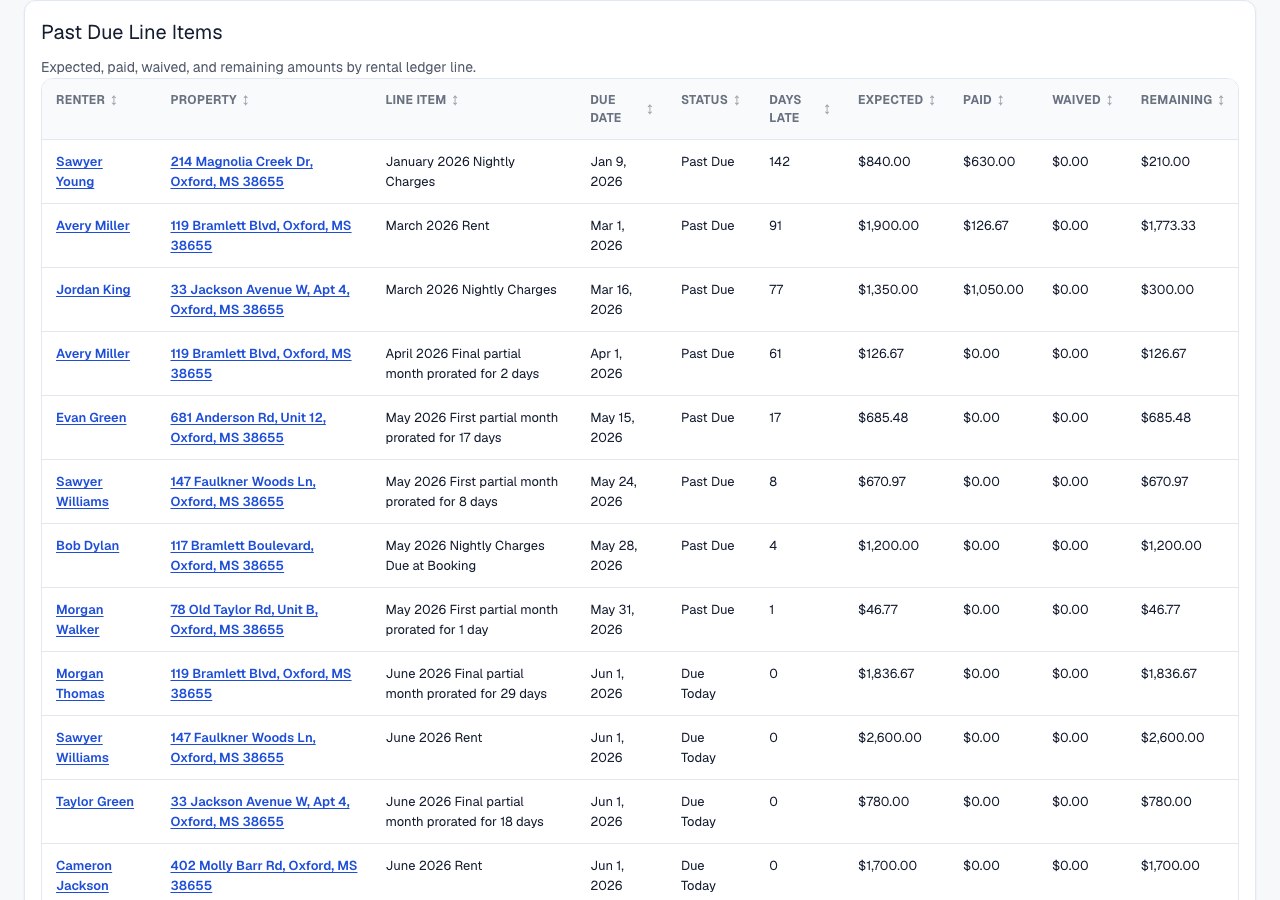
The Past Due Line Items section shows every unpaid charge due today or earlier. Each row includes renter, property, line item, due date, status, days late, expected amount, paid amount, waived amount, and remaining amount.
Use this table as your collection action queue. It explains exactly which ledger rows remain unpaid and how each remaining balance was calculated.
Formula
Expected Amount is the ledger charge original amount.
Paid Amount is the amount the rental ledger has applied to that charge.
Waived Amount is the amount forgiven through rental charge adjustments.
Remaining Amount = charge amount after waivers - paid amount.
Past Due Amount = sum of Remaining Amount for charges whose due date is today or earlier.
Days Late = calendar days from due date to today for charges before today.
Average Days Late = average Days Late across past-due rows only.
Data Sources
The Past Due Report is built from the Rental Ledger. The ledger is the source of truth for charges, payment allocation, waivers, refunds, due dates, open balance, and past due amount.
The report excludes not-yet-due charges and canceled rentals from the normal collection action queue.
Included Records
- Unpaid rental ledger charges whose due date is today or earlier.
- Due Today charges for collection follow-up totals.
- Partially paid charges with remaining balances.
- Charges reduced by waivers when a remaining amount is still owed.
- Active and non-canceled rentals visible in the current company scope.
Excluded Records
- Not-yet-due unpaid charges.
- Future balances that belong in the Open Balance Report instead.
- Charges that have been fully paid or fully waived.
- Canceled rentals removed from normal collection queues.
- Property expenses, because they are not renter ledger charges.
Days Late Explained
Days Late is the number of calendar days between the charge due date and today. A charge due yesterday is 1 day late. A charge due 45 days ago is 45 days late.
Due Today rows are included in Past Due totals because they are due now, but their Days Late value is zero.
Past Due Vs Open Balance
Open Balance is a receivables view that includes all visible unpaid charges, including future balances.
Past Due is a collections view that includes only unpaid charges due today or earlier.
Use Open Balance to understand everything still owed. Use Past Due to decide who needs follow-up now.
Common Use Cases
- Review which renters currently owe money.
- Prioritize follow-up by oldest balances, largest balances, or delinquent rentals.
- Monitor whether overdue balances are increasing or decreasing.
- Identify rentals that may need additional collection attention.
- Compare past-due balances with Performance Report missed rent trends.
Things To Watch For
- Past Due does not include future unpaid charges. Use Open Balance when you need the full receivables view.
- Due Today is included in Past Due totals and follow-up counts.
- Average Days Late is based on rows that are late by calendar days, not not-yet-due charges.
- If a balance looks wrong, review the Rental Ledger for charges, due dates, payments, refunds, waivers, and opening balance import settings.
Export Options
The Past Due Report supports CSV download, Excel download, and printable PDF-style browser export.
Related Guides
Common Questions
- What is a past due balance?It is an unpaid rental ledger charge whose due date is today or earlier.
- What is the difference between Open Balance and Past Due?Open Balance includes all visible unpaid charges. Past Due includes only charges due today or earlier.
- Why is Average Days Late important?It helps measure how long delinquent balances have remained unpaid.
- What are aging buckets?Aging buckets group overdue balances by Days Late: 1-30, 31-60, 61-90, and 90+.
- How often should landlords review the Past Due Report?Many landlords review it weekly or daily when actively managing collections.
Last Updated
June 2026