
Introduction
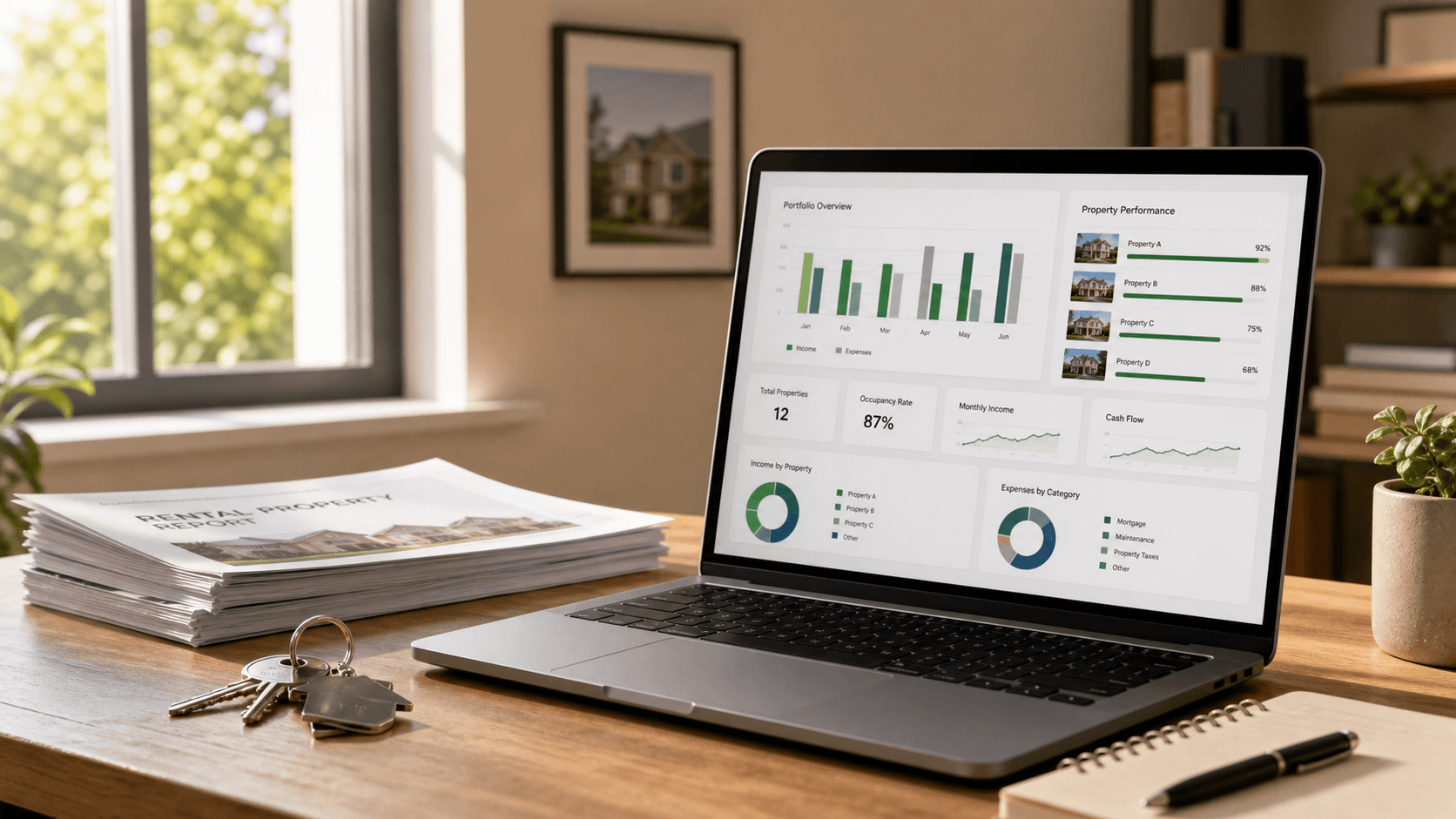
Successful landlords rely on more than rent payments and bank balances to evaluate property performance. Rental property reporting helps landlords transform financial records into actionable insights by organizing income, expenses, occupancy, balances, cash flow, and profitability into meaningful reports.
The best reports help answer practical questions: which properties are performing best, which renters still owe money, how much cash flow is being generated, whether expenses are increasing, what income may be expected in future periods, and which rentals are ending soon.
This guide explains the most important reports landlords should review and how reporting supports better financial decision-making.
What Is Rental Property Reporting?
Rental property reporting is the process of organizing rental property data into reports that help landlords understand income, expenses, balances, cash flow, occupancy, and property performance.
Why Rental Property Reporting Matters
Tracking transactions is only the first step. Reporting turns those records into a clearer operating picture by summarizing what has happened, what is still owed, and what may happen next.
Without reporting, landlords often struggle to identify trends, spot collection issues, compare properties, and make informed decisions across a rental portfolio.
- Understand property performance
- Monitor cash flow
- Evaluate profitability
- Track occupancy
- Manage collections
- Plan future investments
- Prepare organized records for tax season
Types Of Rental Property Reports
Most rental property reporting falls into five broad categories: performance reports, financial reports, balance reports, forecasting reports, and operational reports.
Each category provides a different view of portfolio performance. A landlord reviewing only one report may miss issues that become obvious when income, expenses, balances, occupancy, and rental timelines are reviewed together.
Performance Reports
Performance reports focus on rental collection, missed rent, occupancy, and overall rental performance. They help landlords understand how much revenue could have been earned, how much was expected, how much was collected, and where revenue was lost to vacancy or missed payments.
Performance reporting is often one of the quickest ways to identify operational issues affecting revenue. A property with strong collection but high vacancy has a different problem than a property with good occupancy but weak collections.
- Potential Revenue
- Expected Rent
- Collected Revenue
- Vacancy Loss
- Missed Rent
- Collection Rate
- Occupancy Rate
Cash Flow Reports
Cash flow reports focus on money entering and leaving the portfolio. They help landlords understand total income, total expenses, net cash flow, and property-level cash performance.
Cash flow reports are among the most important reports for evaluating the financial health of a rental portfolio. Cash flow is related to profitability, but it is not the same as taxable income or long-term investment return.
- Total Income
- Total Expenses
- Total Net Cashflow
- Monthly Net
- Property Net
Open Balance And Past Due Reports
Balance reports help landlords monitor unpaid charges. Open balance reporting shows unresolved unpaid charges, while past due reporting focuses on amounts that should already have been paid.
These reports help answer who owes money, how much is overdue, which balances require follow-up, and whether collection risk is growing over time.
- Total Open Balance
- Total Past Due
- Total Not Yet Due
- Delinquent Rental Count
- Average Days Late
Accounting Reports
Accounting reports provide detailed financial records for bookkeeping, accounting, and tax preparation. They are most useful when they separate rental income from other collections and show property expenses clearly.
A strong accounting report helps organize financial activity into categories that accountants and tax professionals can review more easily. It should support review, not replace professional tax advice.
- Rental Income
- Other Collections
- Property Expenses
- Net Operating Income
- Payment Detail
- Expense Detail
Property Profitability Reports
Property profitability reports compare properties based on financial performance. They help landlords identify best-performing properties, worst-performing properties, high-income properties, and high-expense properties.
Profitability reporting is especially valuable for landlords managing multiple properties because portfolio totals can hide underperforming properties.
- Rental Income
- Expenses
- Net Operating Income
- Net Cashflow
- Best Property
- Worst Property
Income Forecast Reports
Forecasting reports help landlords estimate future performance from booked rental activity, planned one-time expenses, and known scheduled expenses. Unlike historical reports, forecast reports focus on future expectations.
Forecasts can support budgeting, cash planning, investment decisions, and portfolio growth strategies. They should still be reviewed with judgment because unknown future vacancies, repairs, and one-time expenses may not be predictable unless they have been entered as planned or scheduled costs.
- Projected Revenue
- Collected Revenue
- Planned One-Time Expenses
- Scheduled Expenses
- Projected Expenses
- Projected Net Income
Expense Analysis Reports
Expense reports help landlords understand where money is being spent. They can show the largest expense categories, properties with the highest expenses, monthly spending trends, and individual expense details.
Expense analysis helps landlords identify opportunities to improve profitability by controlling costs, spotting unusual spending, and reviewing vendor or maintenance patterns.
- Category Totals
- Property Totals
- Monthly Trends
- Expense Detail
- Maintenance Expense Percent
- Average Expense Per Property
Rentals Ending Reports
Operational reports focus on upcoming activities rather than finances alone. Rentals ending reports help landlords plan renewals, prepare turnovers, identify upcoming vacancies, and contact renters before lease expiration.
Operational reporting can reduce vacancy risk because it gives landlords more time to prepare for rental endings and future availability.
- Rentals In Window
- Ending Today
- Upcoming Endings
- Already Ended
- Property Count
- Rate Total
Reports Landlords Should Review Monthly
At minimum, most landlords benefit from reviewing performance, cash flow, open balance, expense analysis, and property profitability reports each month.
Together, these reports provide a comprehensive view of portfolio performance: collections and occupancy, money in and out, unpaid balances, spending trends, and property-level results.
- Performance Report for collections, occupancy, vacancy loss, and missed rent
- Cash Flow Report for income, expenses, and net cash flow
- Open Balance Report for unpaid charges that still need resolution
- Expense Analysis Report for category, property, and monthly spending trends
- Property Profitability Report for property comparisons and ranking
How Reporting Supports Better Decisions
Reporting helps landlords move beyond simply recording transactions. Financial data becomes significantly more useful when it is organized into meaningful reports that can be reviewed consistently.
Strong reporting supports better budgeting, improved collections, occupancy management, expense control, investment decisions, and portfolio growth.
Ready to Organize Your Rental Property Finances?
PropioLedger helps landlords track income, expenses, payments, balances, reports, and property performance without rebuilding records from disconnected spreadsheets.
Educational Disclaimer
This guide is for general educational purposes and is not tax, accounting, legal, or financial advice. Landlords should consult a qualified professional for guidance specific to their situation.