
Key takeaways
- A rental property balance sheet is a point-in-time snapshot of assets, liabilities, and owner’s equity.
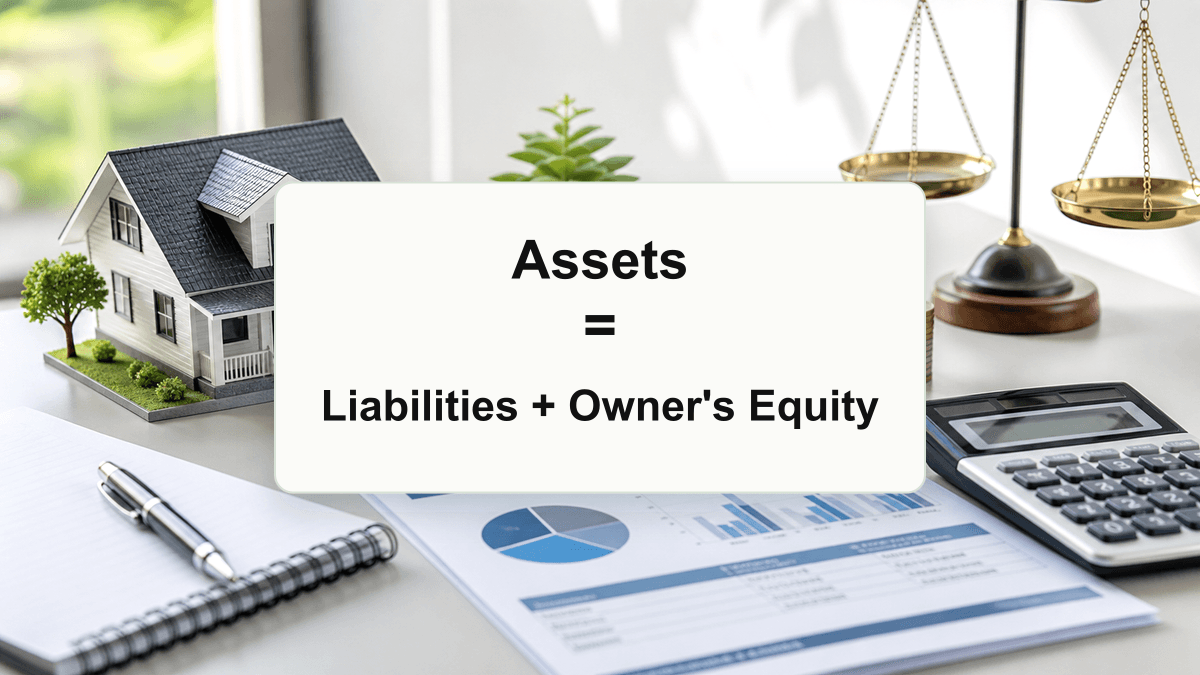
- The basic relationship is Assets = Liabilities + Owner’s Equity.
- A formal accounting balance sheet usually uses recorded book values, while an informal landlord net-worth view may use estimated market values.
- Accounting owner’s equity is not necessarily market-value property equity: accounting equity reflects recorded assets, liabilities, owner activity, accumulated results, and adjustments; market-value property equity generally compares estimated current property value with property debt.
- Refundable security deposits are generally liabilities until they are returned or legally retained.
- Mortgage principal, capitalized improvements, owner contributions, and estimated appreciation affect long-term financial position differently than monthly cash flow.
- PropioLedger helps organize rental income, property expenses, payments, balances, cash flow, accounting detail, and reports, but it should not be treated as producing a formal balance sheet.
On this page
- What Is a Rental Property Balance Sheet?
- The Balance Sheet Equation
- Book Value Versus Estimated Market Value
- Why Landlords Should Understand Balance Sheets
- What Appears on a Rental Property Balance Sheet?
- Rental Property Assets
- Rental Property Liabilities
- How a Mortgage Affects a Rental Property Balance Sheet
- Owner’s Equity
- Rental Property Balance Sheet Example
- Balance Sheet vs. Rental Property Equity
- Balance Sheet vs Income Statement
- Balance Sheet vs. Cash Flow
- Balance Sheet vs. Rent Roll
- How to Prepare a Rental Property Balance Sheet
- Common Balance Sheet Mistakes
- How PropioLedger Helps Organize Balance Sheet Inputs
- Educational Disclaimer
- Frequently Asked Questions
What Is a Rental Property Balance Sheet?
A rental property balance sheet is a financial statement that shows what a rental business or rental portfolio owns, what it owes, and the owner’s equity at a specific point in time.
Unlike an income statement, which measures profitability over a period of time, a balance sheet provides a snapshot of financial position on a particular date.
For landlords, the balance sheet helps answer questions such as how much equity exists, how much debt remains, what rental assets are worth, whether the portfolio is becoming stronger over time, and how net worth changes as loans are paid down.
A formal accounting balance sheet is different from an informal landlord net-worth view. Formal accounting statements generally rely on recorded book values from the accounting records, while a personal or portfolio net-worth worksheet may use estimated market values to approximate current economic position.
Unlike a rental ledger, which tracks renter charges and payments, or a general ledger, which records accounting activity by account, a balance sheet summarizes the financial position created by those records.
The Balance Sheet Equation
Most balance sheets are built around one accounting relationship: Assets = Liabilities + Owner’s Equity.
Assets are what the rental business owns or controls. Liabilities are what it owes or may need to return. Owner’s Equity is the report label for the owner’s remaining financial interest after liabilities are subtracted from assets.
Every financial transaction ultimately affects one or more parts of that relationship. Collecting rent increases cash. Paying down mortgage principal reduces cash and reduces loan balance. Buying and capitalizing an appliance may increase property-related assets. Taking on new financing may increase both cash and liabilities.
| Formula | Meaning |
|---|---|
| Assets = Liabilities + Owner’s Equity | What the rental business owns is funded by what it owes plus the owner’s remaining interest |
| Owner’s Equity = Assets - Liabilities | The owner’s financial position after debts and other obligations are subtracted |
Book Value Versus Estimated Market Value
Formal accounting balance sheets generally use recorded book values. A rental building might appear at its historical cost, adjusted for capitalized improvements and less accumulated depreciation, rather than at what the property might sell for today.
Landlords also sometimes create informal net-worth or financial-position worksheets using estimated market value. That can be useful for understanding economic equity, refinancing decisions, or portfolio progress, but it is not the same as a formal accounting balance sheet.
Property appreciation may increase estimated economic equity, but it is not necessarily recorded on a formal accounting balance sheet. Whether and how value changes appear depends on the accounting basis, reporting purpose, entity structure, and professional guidance.
If your goal is to estimate how much current market value remains after property debt rather than prepare an accounting balance sheet, see the Rental Property Equity Guide.
Landlords tracking ongoing financial activity may also want to understand how transactions flow through a general ledger before appearing on financial statements.
In this guide, “formal balance sheet” refers to an accounting statement based on recorded values, while “informal landlord financial-position view” refers to a practical owner worksheet that may use estimated current market value.
Why Landlords Should Understand Balance Sheets
Many landlords focus almost entirely on monthly cash flow. Cash flow is important, but it only tells part of the story.
A property that produces modest monthly cash flow may still build significant wealth through mortgage principal reduction, appreciation, additional investment, and long-term equity growth.
The reverse can also be true. Strong monthly cash flow does not necessarily mean a property has a healthy financial position if debt levels are excessive, records are incomplete, or large obligations are not visible.
- Estimate owner’s equity by property or portfolio.
- Review remaining mortgage and other loan balances.
- Track cash and other assets connected to rental operations.
- Keep refundable deposits visible as obligations.
- Compare financial position over time instead of only reviewing monthly cash flow.
- Prepare cleaner information for lenders, accountants, partners, or internal portfolio review.
What Appears on a Rental Property Balance Sheet?
Most landlord balance sheets contain three major sections: assets, liabilities, and Owner’s Equity.
The exact accounts depend on the landlord’s ownership structure, accounting method, financing, software, and professional guidance. A single-property landlord may use a simpler format than a larger portfolio owner with multiple entities and loans.
| Section | What It Represents | Rental Property Examples |
|---|---|---|
| Assets | Resources the rental business owns or controls | Cash, bank accounts, land, buildings, appliances, improvements, receivables, prepaid insurance |
| Liabilities | Amounts owed to others or amounts that may need to be returned | Mortgage balance, HELOC balance, vendor bills, property taxes payable, security deposits owed to renters |
| Owner’s Equity | The owner’s financial interest after liabilities are subtracted from assets | Owner contributions, owner draws, retained earnings or accumulated results, and other equity activity depending on reporting method |
Related Guides
Rental Property Chart of AccountsRental Property Assets
Assets represent items of financial value connected with the rental property or rental portfolio.
Current assets are expected to be used within one year. Long-term assets are expected to remain in service for multiple years. Appliances, equipment, and improvements become assets only when they are capitalized rather than expensed. Land is generally not depreciated, while buildings and qualifying improvements may be depreciated. Some landlords also track accumulated depreciation as a contra-asset depending on their accounting practices and professional guidance.
Current Assets
Current assets are short-term resources, usually cash or items expected to become cash or be used within a year.
| Current Asset | Example |
|---|---|
| Checking accounts | Operating cash used for rent deposits and property bills |
| Savings accounts | Reserve funds for repairs, taxes, insurance, or vacancies |
| Undeposited rent | Collected rent not yet deposited, if tracked separately |
| Tenant receivables | Amounts owed by renters when using accrual-style records |
| Prepaid insurance | Insurance paid in advance for future coverage periods |
Long-Term Assets
Long-term assets are property-related resources expected to benefit the rental business for more than one year.
| Balance Sheet Line | Example |
|---|---|
| Land | The land portion of the rental property |
| Rental building | The structure used as a rental property |
| Capitalized improvements | Roof replacements, HVAC systems, additions, or major renovations when capitalized rather than expensed |
| Capitalized equipment and appliances | Appliances, equipment, or furniture used in the rental when capitalized rather than expensed |
| Less: accumulated depreciation | Contra-asset tracking used in formal accounting records when applicable |
Rental Property Liabilities
Liabilities represent obligations the landlord or rental business must pay, settle, or return.
Common liabilities include mortgage loans, home equity loans, vendor bills, property tax obligations, insurance premiums due, credit card balances connected with rental activity, and refundable deposits owed to renters.
One common mistake is forgetting that refundable security deposits generally remain liabilities until they are legally retained, applied, or returned. Receiving deposit money increases cash, but it also creates an obligation because the landlord may need to return that money later.
- Mortgage loans and other property debt.
- Home equity loans or lines of credit used for the rental.
- Vendor invoices or accounts payable.
- Property taxes payable.
- Insurance premiums due.
- Credit card balances tied to rental activity.
- Security deposits or refundable pet deposits owed to renters.
How a Mortgage Affects a Rental Property Balance Sheet
Outstanding mortgage principal is generally a liability. When principal is paid from the rental business’s cash, cash decreases and the mortgage liability decreases by the principal amount. Mortgage principal itself is not an operating expense.
Because an asset and a liability decrease together, that payment alone does not increase accounting owner’s equity. It can increase market-value property equity when property value and other debt stay unchanged, because that narrower measure does not include the cash used to make the payment.
Mortgage interest is different. It is generally an expense, subject to the applicable accounting and tax treatment, and does not reduce mortgage principal. Separate principal, interest, and any escrow or other payment components when reviewing loan records.
Owner’s Equity
Owner’s Equity is the report heading for the owner’s residual interest after liabilities are subtracted from assets. On a formal balance sheet, owner’s equity is broader than market value minus mortgage balance because it can include owner contributions, owner draws, retained earnings or accumulated results, current-period activity, and accounting adjustments.
In an informal market-value view, estimated economic equity may increase when a property appreciates or when mortgage principal is paid down. That does not mean appreciation is automatically recorded on a formal accounting balance sheet.
For a simplified landlord financial-position example, assume a rental property has an estimated market value of $450,000 and the rental operating account has $18,000 in cash. Total assets in this informal landlord balance sheet view are $468,000. If the remaining mortgage is $295,000 and refundable security deposits total $3,000, total liabilities are $298,000. The resulting Owner’s Equity is $170,000.
Simplified Landlord Financial-Position Example
| Line Item | Amount |
|---|---|
| Rental property estimated market value | $450,000 |
| Cash | $18,000 |
| Total assets | $468,000 |
| Mortgage balance | $295,000 |
| Security deposits owed | $3,000 |
| Total liabilities | $298,000 |
| Owner’s Equity | $170,000 |
Owner’s Equity vs. Rental Property Equity
These terms are related, but they are not necessarily the same calculation. Accounting Owner’s Equity = Assets − Liabilities. For a simplified market-value property analysis, Rental Property Equity = Current Property Value − Outstanding Property Debt.
The results can differ because recorded property assets may use book value reduced by accumulated depreciation, the business may hold cash and other assets, and its liabilities may include more than the mortgage. Owner contributions, draws or distributions, retained earnings or accumulated results, current-period activity, and accounting adjustments also affect accounting equity.
| Measure | Accounting Owner’s Equity | Market-Value Property Equity |
|---|---|---|
| Formula | Assets − Liabilities | Estimated Current Property Value − Property Debt |
| Property valuation basis | Recorded book value under the applicable accounting basis | Estimated current market value |
| Includes cash/other assets? | Yes, applicable business assets | No, this simplified measure concerns the property itself |
| Includes other liabilities? | Yes, applicable business liabilities | Included property debt, not every entity obligation |
| Includes accumulated depreciation? | Reduces recorded asset value where applicable | Not separately deducted from an estimated market value |
| Primary purpose | Explain the owner’s residual accounting interest | Estimate current property value remaining after debt |
Why the Two Equity Figures Can Differ
A property with an estimated current value of $500,000 and a $300,000 mortgage has $200,000 of market-value property equity: $500,000 − $300,000 = $200,000.
An accounting balance sheet may record the property at a book value different from $500,000, add cash or other assets, and subtract the mortgage plus security-deposit liabilities, accounts payable, and other obligations. Accounting owner’s equity therefore does not necessarily equal $200,000. The Rental Property Equity Guide explains the narrower market-value calculation.
Related Guides
Rental Property Equity GuideRental Property Balance Sheet Example
The simplified example below shows how a landlord might organize a point-in-time financial-position view for one rental property as of December 31, 2026. It is fictional and educational, not a required format.
This example uses estimated market value for the rental property to illustrate a practical landlord net-worth view. A formal accounting balance sheet may use recorded book value, less accumulated depreciation, and may differ from the example shown here.
The statement balances because assets equal liabilities plus owner’s equity.
In this example, $475,000 of assets equals $300,000 of liabilities plus $175,000 of owner’s equity.
| Section | Line Item | Amount |
|---|---|---|
| Date | As of December 31, 2026 | |
| Assets | Cash | $18,000 |
| Assets | Rental property estimated market value | $450,000 |
| Assets | Capitalized appliances and equipment | $7,000 |
| Assets | Total assets | $475,000 |
| Liabilities | Mortgage balance | $295,000 |
| Liabilities | Security deposits held | $3,000 |
| Liabilities | Accounts payable | $2,000 |
| Liabilities | Total liabilities | $300,000 |
| Owner’s Equity | Owner’s Equity | $175,000 |
Balance Sheet vs. Rental Property Equity
A balance sheet answers “What does the rental business own and owe at this date?” Rental property equity answers “How much estimated current property value remains after property debt?” The balance sheet has a broader scope than a single property’s value-minus-debt estimate.
| Question | Balance Sheet | Property Equity |
|---|---|---|
| Scope | Applicable rental business assets, liabilities, and owner’s equity | A property’s estimated value and included debt |
| Valuation basis | Recorded accounting values; informal views must be labeled | Estimated current market value |
| Includes cash? | Yes, applicable business cash | No |
| Includes security-deposit liability? | Yes, where a refund obligation exists | Not in the simple value-minus-property-debt calculation |
| Includes accounts payable? | Yes, applicable unpaid business obligations | Not normally, unless an obligation is included as property debt |
| Uses mortgage/property debt? | Yes, as applicable liabilities | Yes, subtracted from property value |
| Point-in-time? | Yes | Yes |
| Primary purpose | Summarize financial position | Estimate property ownership value |
Balance Sheet vs Income Statement
A balance sheet and an income statement answer different questions.
The balance sheet shows financial position on a specific date. The income statement shows income, expenses, and profit or loss over a period of time.
Both reports are useful. A landlord may use an income statement to review annual rental income and expenses while using a landlord balance sheet to understand debt, assets, and equity at year-end.
| Balance Sheet | Income Statement |
|---|---|
| Shows financial position | Shows profitability |
| Snapshot on one date | Covers a time period |
| Includes assets, liabilities, and Owner’s Equity | Includes income and expenses |
| Measures net worth or financial position | Measures profit or loss |
Balance Sheet vs. Cash Flow
Cash flow measures money moving into and out of the rental business over a period. A balance sheet measures what the rental business owns and owes at a specific point in time.
For example, collecting rent affects cash flow and increases cash. Paying mortgage principal reduces cash flow while also reducing a liability. Paying mortgage interest affects cash flow and profitability. Buying a rental property changes the balance sheet because assets, cash, equity, and liabilities may all be affected.
| Balance Sheet | Cash Flow |
|---|---|
| Shows assets, liabilities, and Owner’s Equity | Shows cash moving in and out |
| Point-in-time snapshot | Covers a period such as a month or year |
| Shows mortgage balance and equity context | Shows rent collected, expenses paid, refunds, and other cash movement |
| Helpful for financial position | Helpful for operating liquidity and cash planning |
Balance Sheet vs. Rent Roll
A balance sheet summarizes financial position through assets, liabilities, and owner’s equity. A rent roll summarizes rental operations: units or rentals, renters, rent amounts, rental dates, occupancy or status, and balances depending on the report.
Neither replaces the other. A rent roll can help explain who is renting and what is scheduled or owed, while a balance sheet shows the broader financial position at the reporting date.
Related Guides
Rent Roll GuideHow to Prepare a Rental Property Balance Sheet
Start with a reporting date and supporting records for the rental business or entity being reviewed. These steps provide a practical rental property balance sheet template for organizing the work; account selection and formal presentation depend on the applicable accounting basis.
- Choose the reporting date.
- List applicable assets, including cash and property-related assets.
- Record current liability balances from loan statements and other supporting records.
- Separate refundable deposit obligations from income and owner funds.
- Determine appropriate recorded/book values for formal accounting, including capitalized costs and accumulated depreciation where applicable.
- Calculate Owner’s Equity = Assets − Liabilities.
- Verify Assets = Liabilities + Owner’s Equity, and reconcile the underlying account balances to supporting records.
- Document assumptions, valuation methods, and whether the view is formal accounting or an informal market-value estimate.
- Compare with prior reporting dates and explain significant changes where useful.
- Have an accountant review formal financial statements when appropriate.
Common Balance Sheet Mistakes
Balance sheets become less useful when the underlying records are incomplete or inconsistent.
Small landlords often run into trouble when bank activity, loan details, owner transfers, deposits, repairs, improvements, and property-level records are mixed together without enough context.
- Mixing personal assets and liabilities with rental business records.
- Confusing estimated market value with accounting book value, or market-value property equity with accounting owner’s equity.
- Forgetting refundable security-deposit liabilities or treating refundable deposits as ordinary rental income.
- Counting the full mortgage payment as an expense instead of separating principal reduction from interest and other components.
- Failing to update loan balances or omitting relevant secured debt such as a drawn HELOC.
- Failing to reconcile balance-sheet accounts to bank, loan, deposit, and other supporting records.
- Ignoring owner contributions and owner draws.
- Not separating capitalized improvements from repairs or ordinary expenses.
- Waiting until tax season to organize financial records.
- Using estimated property values without documenting the source or method.
How PropioLedger Helps Organize Balance Sheet Inputs
PropioLedger is designed for rental property operations and accounting detail. It helps landlords organize properties, rentals, renter balances, payments, property expenses, cash flow, accounting detail, property profitability, and reports in a rental-specific workflow.
Those records can support the information a landlord or accountant reviews when preparing financial statements, but PropioLedger should not be treated as producing a formal balance sheet, maintaining a complete double-entry general ledger, generating trial balances, or replacing full entity-level accounting software.
PropioLedger does not automatically value properties or track property equity. Valuations, loan balances, and complete entity-level accounting require separate records and review.
The practical benefit is cleaner source information. When rental income, security deposits, reimbursements, property expenses, refunds, open balances, and cash-flow activity are organized by property and rental, landlords can review their portfolio with less cleanup and give professionals better supporting detail for a landlord balance sheet or other financial review.
Organize the Records Behind Rental Property Reports
Balance sheets depend on clean underlying records. PropioLedger helps landlords keep rental income, property expenses, payment activity, renter balances, cash flow, and property performance organized throughout the year.
Educational Disclaimer
This guide is for general educational purposes and is not tax, accounting, legal, financial, or investment advice. Balance sheet presentation, asset valuation, depreciation, security deposit treatment, loan classification, entity reporting, and tax treatment depend on individual circumstances, accounting method, applicable standards, state and local rules, and professional judgment. Landlords should consult a qualified accountant, tax professional, attorney, or financial advisor for guidance specific to their situation.